7.27.2006
Guggenheim Study Vindicates Art Programs

Who will make sense of this silly, loopy world? I feel so completely filled with happy when I hear about this story, reported in the NYT, concerning the future of art programs in schools. Also, I'm tipsy and on vacation. So, the lovely Guggenheim sponsors this study where, "the museum dispatches artists who spend one day a week at schools over a 10- or 20-week period helping students and teachers learn about and make art," right? Upon their exit interviews, the organizers dicovered that, "students in the program performed better in six categories of literacy and critical thinking skills — including thorough description, hypothesizing and reasoning — than did students who were not in the program." Now, finally, after months without an explanation, I discover why the hell someone would be dumb enough to blather on about this arty nonsense. Pure gold.


7.26.2006
Sneaky Weegee Shots
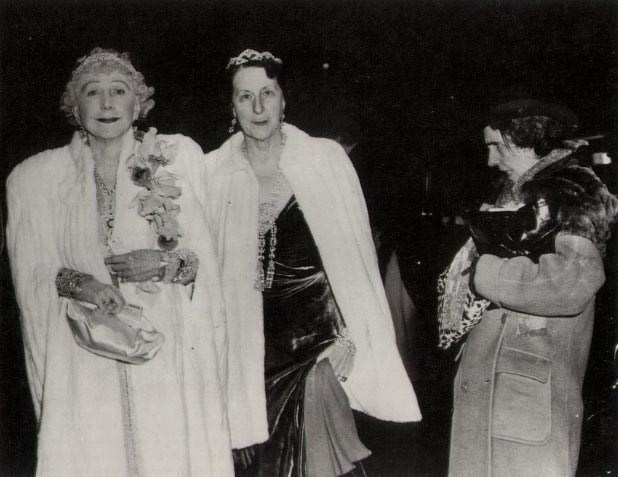
 For a truly unruly picture of midcentury New York, have a look at this CBC photo essay highlighting the Weegee exhibit running at New York’s International Center of Photography. The exhibit and the essay self-consciously examine the lesser-known stylings of a guy who became famous for a very specific type of photo: "Today Weegee is best known for his shots of criminals and corpses — he estimated he photographed 5,000 murder scenes during his life — but his interests reached far beyond that. His body of work is marked by a deep concern for the poor and immigrant classes; even gangsters come across looking sheepish and knocked-about."
In spite of, or likely because of, his lack of training, Weegee (a.k.a. Arthur Fellig) took stark, gritty shots that underscored the most naked of emotions. He was known to turn his camera on the crowd at crime scenes: "sometimes drawn there by some power I can’t explain, and I caught New Yorkers with their masks off ... not afraid to laugh, cry, or make love. What I felt, I photographed, laughing and crying with them." People sans masks -- if only that were the regular state of things.
Not all of his subjects, however, were treated with such compassion: "He seemed to like everybody except for New York’s high society; sometimes he used special lights to bring out rich people’s wrinkles and dental problems." Those poor, poor rich. All they want to do is live a fabulous life and eat the meek. Still, I wonder if in exposing high society's fault lines, Weegee didn't accidentally humanize it. Perhaps that was the point, though his intentions seem somewhat more vicious.
7.25.2006
Sculpture Vulture?
 This one definitely gets a thumbs up (HAR!). Flipping through the images of Strange Statues around the World is like tumbling through someone's unconscious. It's just so great to see the most bizarre corners of the mind suddenly manifested in three dimensions. I was going to add my own contributions to this post, but Blogger is being a cockered elf-skinned flap-dragon today. Stay posted....
UPDATE: Here they are. These were taken on the five thousand kilometer drive to Kingston from Victoria.
You'll Understand in Ten Years
 What would you ask the most prominent thinkers of our time? If you have an answer to that question, why not take this opportunity to do so? dropping knowledge is a strangely undefined entity that provides a forum for discussion on global issues. According to its website, "dropping knowledge is a global initiative to turn apathy into activity. By hosting an open conversation on the most pressing issues of our times, we will foster a worldwide exchange of viewpoints, ideas and people-powered solutions. However knowledge is defined, by dropping it freely to others, we all gain wisdom."
This year in Berlin, dropping knowledge will be organizing the Table of Free Voices, an enormous round table discussion of world issues that will take place between over a hundred of "the world's most compelling thinkers, artists, writers, scientists, social entrepreneurs, philosophers and humanitarians." Here's the chance to have the likes of Slavoj Zizek, Gabriel Garcia Márquez and Jello Biafra (woot) bat around your most burning questions and ideas. My question is, why is there barely anybody under thirty nominated for the panel? Seriously. How come it takes more than forty years for a person to be able to meaningfully discuss anything? What am I, chopped livah? If it's not a simple bias issue with dk, then the question becomes, how are young people supposed to get up to speed... speedier?
7.24.2006
I Took Thee for Thy Better
 English students everywhere will adore Shakespeare Online, the hippest Billsite around. The artless bat-fowling flirt-gills can garner hundreds of ear-kissing arguments rather than penning their own, plus they can get all the dirt on the bard's penny-pinching, his moonlighting as a butcher and barber, and his dabbling in psychotropic substances. Amanda Mabillard has run the site since 1999, and has received rave reviews and several web awards. Bonus: she's a canuck.
Super extra bonus: stun all your foes with the Shakespearian Insulter, thou crusty botch of nature!
Finally Justice for All
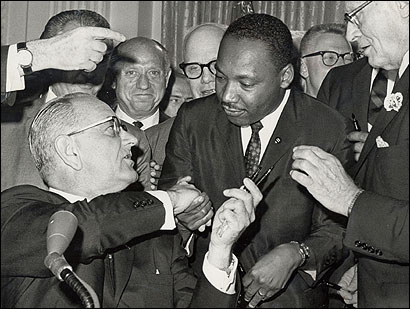 In a serious case of wicked awesome, this article (RR) talks about the shift that has taken place in the American Justice Department's Civil Rights Division since my other best friend George Bush has taken over: "only 42 percent of the lawyers hired since 2003, after the administration changed the rules to give political appointees more influence in the hiring process, have civil rights experience. In the two years before the change, 77 percent of those who were hired had civil rights backgrounds." Previously hiring "had been handled by civil servants -- not political appointees," but thank Jesus that's all changed now, because there is a huge group of Americans who have been disenfranchised and silenced for too long.
"The division is bringing fewer voting rights and employment cases involving systematic discrimination against African-Americans, and more alleging reverse discrimination against whites and religious discrimination against Christians." Hallelujah! It's about time those poor White Christians had some say in what happens in this world. Since at least Elizabethan times the white man has been held down by his cruel non-white, non-Christian opressors. That's, like, ten hundred years.
Defenders of this shift claim that it comes as no surprise, because of "an entrenched bureaucracy of liberals who did not support the president's view of civil rights policy." People with the slightest amount of sense in their heads have responded claming, simply, "most people interested in working to enforce civil rights laws happen to be liberals." Weird. I wonder why. Here's the question I have: when the Civil Rights Divison becomes a government pawn that hires people based on discriminatory policies, who holds it responsible?
UPDATE: Salon is also picking up the story (AdReqBoo).
7.23.2006
Light-Headed Art Finds a Home
 The New York Times is running a great piece (RR) on the new Parrish Art Museum that is slated to open in 2009 in Southampton, NY. For you uncultured slugs like me, Southampton is the rural area where the likes of Pollock, Lichtenstein, de Kooning, and Krasner have been drawn to over the years. The new architectural commision was necessary because "the museum had outgrown its current building, an 1898 brick structure that lacks sufficient space for major exhibitions, storage and educational activities."
What strikes me so much about the NYT article (and the design itself) is the way it carefully articulates the new space in relation to the locale: "The architects’ response to the 14-acre site in Water Mill was to spread about 30 modest, low-slung buildings over the area, sandwiched between the Montauk Highway and the Long Island Rail Road tracks. With their varying shapes, angular roofs and local vegetation, the buildings look to be growing out of the ground."
To arrive at this plan, the winning architectural firm, Herzog and de Meuron (of Tate Modern fame), studied both the artistic spaces of previous residents and consulted with current artists residing there: "They observed how artists created their studios in former farm buildings, sheds and shacks and oriented those spaces around the northern light." The results are dazzling, and they raise questions of how un-arbitrary visial signifers can really be.
Underwear Perverts to the Rescue!
 Sunday already? On Wired yesterday I found an amazing slideshow of World War Two and postwar era comic covers, many of which are drawn by the incomparable Alex Schomburg, whose work may have inspired Bender the Robot among other things. I wonder what the super-heroes (aka underwear perverts) of the current war would look like, or why that seems like such an incongruous idea in the first place.
"Don't let my looks startle you Lois! I am not the inferior Superman you know! I am the ultra Superman, from the year 100,000! Why does every sentence I say end in an exclamation mark?!"